

Les catalogues de bibliothèques utilisent la logique booléenne pour interpréter vos recherches et fournir des listes de résultats. La logique booléenne est un système de logique vrai/faux basé sur les travaux du mathématicien George Boole. Elle repose sur les trois opérateurs ET, OU et NON. La plupart des langages de programmation informatique ont un moyen d'exprimer et de lire ces opérateurs, et ils constituent un élément fondamental des recherches dans les bibliothèques numériques depuis des décennies.
Ce guide utilisera italique pour indiquer des termes de recherche, car les guillemets et certaines autres ponctuations, comme vous le verrez, ont des significations spécifiques qui modifieront votre recherche. Pour éviter toute confusion, les titres d'œuvres et les mots accentués seront souligné. Il n’est pas nécessaire d’utiliser l’italique lorsque vous effectuez une recherche dans la base de données DTL. De même, ce guide présentera les trois opérateurs booléens de base en majuscules, comme dans le paragraphe précédent, afin qu’ils soient facilement repérables et identifiables en tant qu’opérateurs. Le système de la bibliothèque ne fait pas la distinction entre majuscules et minuscules. Vous pouvez saisir les opérateurs en majuscules si cela vous aide, mais cela n’aura aucune incidence sur le système. Vous remarquerez également que, tout au long de ce guide, les noms propres dans les expressions de recherche peuvent être écrits en majuscules ou en minuscules. Le système ne fera pas la distinction entre Rogers et Rogers.
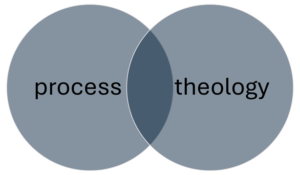
L'opérateur le plus courant et celui par défaut est ET. Lorsque vous tapez une expression de plusieurs mots dans la barre de recherche, comme théologie du processus, le système lit processus ET théologie. Il recherchera tout enregistrement qui contient les deux les mots processus et théologie n'importe où dans l'enregistrement, mais cela ne fera aucune différence si ces mots sont utilisés ensemble ou comment ils sont utilisés ensemble. Donc un livre intitulé La théologie du processus en tant que théologie politique s'affiche dans la même liste de résultats qu'un livre intitulé Théologie interculturelle avec le terme générique “ processus ” figurant quelque part dans la description.
Cela ne signifie pas que cette méthode de recherche la plus élémentaire ne fonctionne pas. Comme la “ théologie du processus ” est un terme technique et qu’il existe de nombreux livres et articles à ce sujet dans la DTL, si vous recherchez simplement l’expression théologie du processus vous y trouverez de nombreuses ressources utiles. D'ailleurs, il suffit de taper processus, vous recevez le journal Études de processus sur la première page de résultats. Vous obtenez toutefois également beaucoup de résultats non pertinents ; si vous vous retrouvez à devoir passer au crible de nombreux résultats inutiles, vous devrez peut-être reformuler votre recherche.
Ajouter plus de mots affinera naturellement votre recherche. S'il y a 10 000 enregistrements avec les deux processus et théologie quelque part en eux, en ajoutant philosophie supprimera n'importe lequel de ces 10 000 sans ce troisième mot. Plus vous ajoutez de mots à une recherche de base comme celle-ci, plus elle sera ciblée et donc plus limitée. La plupart du temps, vous pouvez trouver un livre ou un article spécifique en tapant simplement le nom de famille de l'auteur et deux ou trois mots importants du titre. Allez au DTL et recherchez la phrase graffiti de rogers dieu. Vous devriez vous procurer le livre du professeur Frank Rogers du CST. Découvrir Dieu dans les graffitis en tant que premier ou deuxième résultat.
- Astuce : Parfois, pendant que vous tapez, le système vous propose une liste déroulante de termes de recherche potentiels. Vous pouvez sélectionner un de ces termes s'il correspond à ce que vous recherchez, ou ignorer la liste et faire votre propre recherche. Si vous décidez d'ignorer la liste déroulante, vous devrez peut-être cliquer manuellement sur le bouton de recherche à droite de la barre de recherche, car parfois le premier élément de la liste déroulante est automatiquement sélectionné. Si vous appuyez simplement sur la touche Entrée pour lancer la recherche, elle portera sur cet élément au lieu de ce que vous avez tapé. Tous les systèmes informatiques ont leurs petites fonctionnalités agaçantes, et celle-ci est l'une des particularités du catalogue DTL.
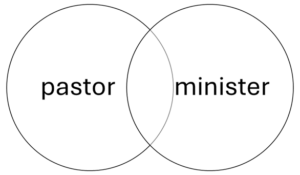
L'opérateur « OR » constitue un moyen pratique de varier la formulation de vos recherches. Cet opérateur s'avère particulièrement utile lorsque vous utilisez des synonymes. La recherche processus OU théologie trouvera tous les enregistrements avec le mot processus et chaque enregistrement avec le mot théologie, y compris des documents les concernant tous les deux. C'est probablement beaucoup trop, et la plupart d'entre eux seront sans rapport. Mais vous cherchez peut-être des documents sur les professionnels religieux protestants. Vous pouvez taper pasteur ou ministre pour obtenir une gamme de.
Comme OR est susceptible de trouver un nombre de résultats beaucoup plus important que AND, il est préférable de l'utiliser avec précaution ou en combinaison avec d'autres opérateurs.
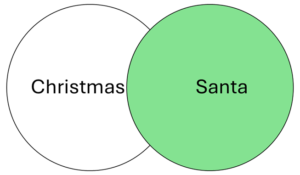
C'est l'opérateur le plus difficile, car il est facile d'éliminer accidentellement des éléments que vous pourriez vouloir voir. Il est préférable d'utiliser NOT lorsque vous recherchez un terme qui a des utilisations dans des contextes très différents ou si vous souhaitez éliminer des éléments sur un sous-thème obscur.
Disons que vous souhaitez faire des Noël Pas Le Père Noël, (la section ci-dessous sur les guillemets expliquera comment inclure le nom complet du Père Noël dans cette recherche), mais cela pourrait signifier que vous ne verrez pas les enregistrements de livres qui seraient principalement utiles mais qui incluent un chapitre facilement ignoré sur le Père Noël. Ce n'est peut-être pas le bon moment pour utiliser `NOT`.
Cependant, NOT peut s'avérer utile dans d'autres cas. Imaginons que vous tapiez Noël dans le catalogue et obtenir des millions de résultats, mais pour une raison quelconque, beaucoup des premiers résultats sont des documents sur la plante parfois appelée cactus de Noël. Dans ce cas, vous pouvez essayer Noël PAS cactus ou Noël PAS botanique ou quelque chose de similaire pour éliminer ces résultats non pertinents. La DTL a accès à de nombreux journaux médicaux car ils sont inclus dans certains autres abonnements, de sorte que vous pourriez vous retrouver dans des situations où vous ajoutez PAS de médecine ou similaire peut aider à désencombrer vos résultats.
Vous pouvez également utiliser « NOT » pour exclure de vos résultats les sous-thèmes les moins connus. Le Père Noël fait partie intégrante de Noël aux États-Unis ; utiliser « NOT » pour éviter les documents le concernant pourrait donc se retourner contre vous. En revanche, le personnage européen du Krampus n’a acquis une grande notoriété aux États-Unis que récemment. Si les célébrations de Noël en Allemagne et en Autriche ne vous intéressent pas, vous pouvez peut-être utiliser l’expression Noël PAS Krampus vous aidera à affiner votre recherche.
- Astuce : Il. Alexandrie ET Égypte vous donnera des résultats plus pertinents que Alexandrie PAS Virginie, à la fois parce qu'il identifie positivement votre cible, et parce que vous n'éliminerez pas accidentellement des livres sur la ville égyptienne qui se sont avérés être écrits par des universitaires nommés Virginia.
- Astuce : Les phrases négatives ne dépendent pas de l'ordre, ce qui signifie Noël Pas Le Père Noël est une recherche différente de Père Noël PAS Noël. Voir la section ci-dessous sur les parenthèses pour en savoir plus sur la syntaxe et l'ordre dans les chaînes de recherche.
This section is for people who want to do deep searches, such as finding all or nearly all of the available literature on a topic. It includes a basic description of the technical structures underlying the operations that this guide has already discussed. This provides context for why the catalog works the way it does, which will be helpful as you try to get the most out of it.
Each item in a library catalog has a unique record created using a database cataloging format called machine readable cataloging (MARC). A MARC record consists of many fields whose contents are determined by numbers. For example, field 100 indicates the primary author of a work, and field 245 indicates the title. You won’t see these fields directly, but you can manipulate your searches to make use of them.
Here is a typical DTL catalog record for a book:
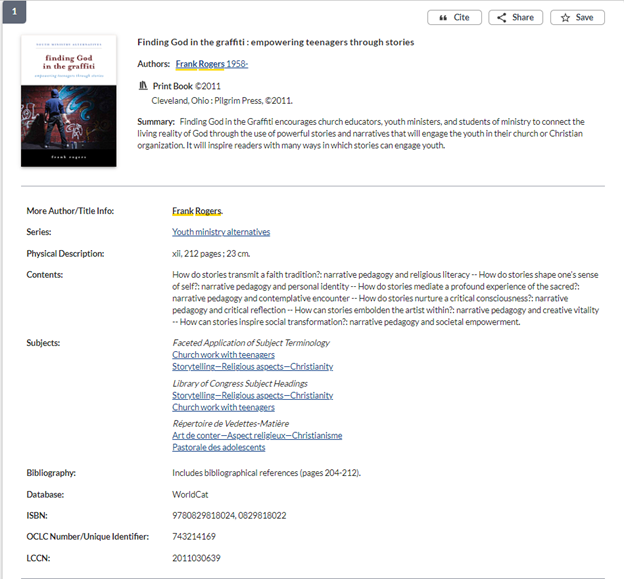
The place of everything in this record is determined by MARC fields. There are many possible fields, so you may see different categories for different types of items. For example, records for journal articles will not usually include the “Series” category or the publication location that’s near the top. There are also a lot of fields that you aren’t seeing but that the system can still read. When you use the checkboxes to narrow your search on the left side of the results page (not shown in this image), you’re asking the system to read various fields, such as those for date or language, to make exclusions from the list it has already given you.
There are two quirks that an advanced researcher should know about:
- Although editors and translators are designated by different MARC fields than authors, for convenience all creators will usually appear in the “Author” category in the record, sometimes–but not always–with their actual designation in parentheses after their name. This is important for your citations. Do not rely on the categories as presented in the catalog for accurate citation information. Make sure to look at the item itself to make sure you’re listing authors, editors, translators, publishers, etc., correctly in your footnotes and bibliographies. It is common to find organizations listed in the catalog on the “Author” line, often for things like conference proceedings where the organization simply convened the conference or funded the work, and shouldn’t be cited as a creator.
- The links in the “Subjects” category are pre-determined headings related to specific MARC fields. They will come up in a general keyword search, but if you click one of the links it will only look for other items with that specific heading designated in a MARC field. That means it will not necessarily find every item associated with that topic, since a librarian or technician had to deliberately choose to include it in the record. Subject headings can be very helpful for browsing and for focusing your searches if you’re getting a lot of irrelevant results, but don’t mistake them for exhaustive lists of everything published on a particular topic. The fact that subject headings are pre-determined makes them poor options for starting your search, because you need to know what the subject heading is called before you can search for it. Further, the way they’re phrased is not always intuitive to specialists in a field, especially if vocabulary or other considerations about the topic have changed since the headings were created. It took years of advocacy by librarians to get the subject heading Illegal aliens changed, and then many libraries had to manually update their records to reflect the change. You can browse the very, very extensive full list of Library of Congress subject headings here (but you can see in the record above that other lists exist, often created by the national libraries of other countries): https://www.loc.gov/aba/publications/FreeLCSH/freelcsh.html